STEP 01
Put the entry point where you can't miss it
That raised yellow "Build a paper" button in the middle of the tab bar is the only element in the whole app that breaks out of the tab row.
Judgement: this is something the user does every day; it cannot live two levels deep. Where you put an entry point is your bet on how often it gets used.
STEP 02
Two routes —— nobody is forced to talk to the app
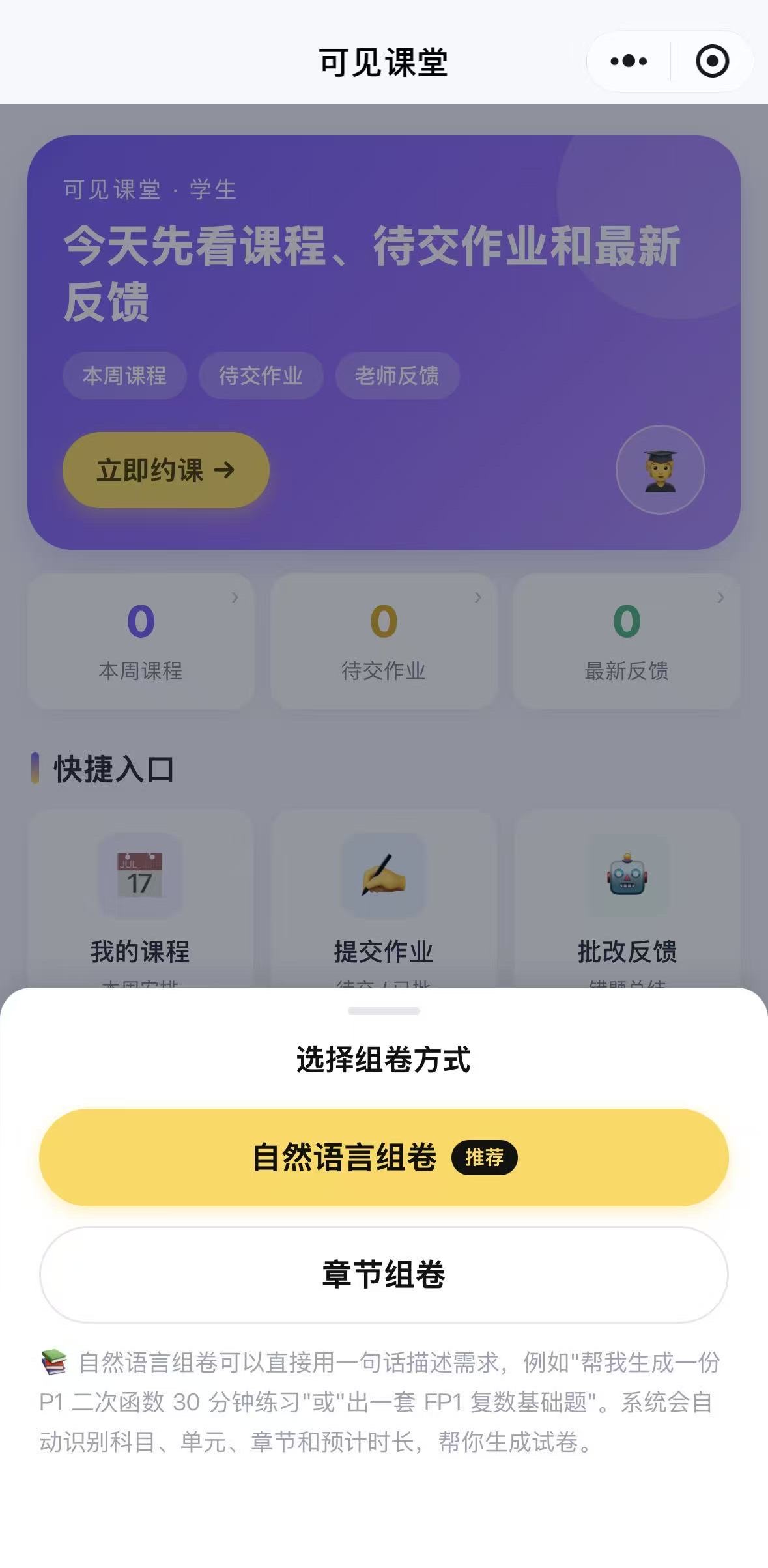
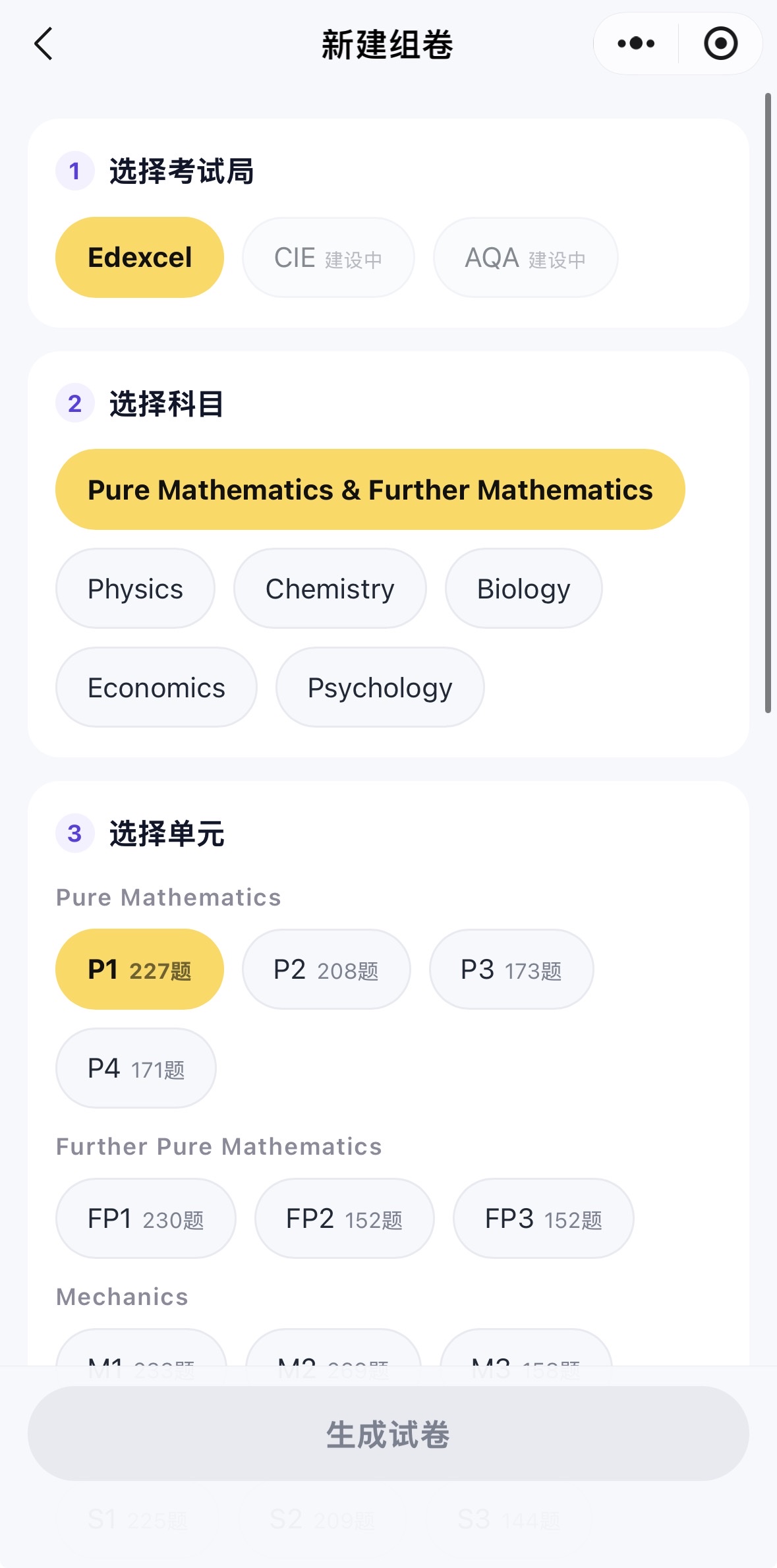
"Natural language (recommended)" sits next to "By chapter". The second one is an honest three-level filter: board → subject → unit.
Judgement: not everyone is comfortable describing what they want to an app. Keep the old way intact, mark the new way as recommended —— let users migrate themselves instead of forcing them.
STEP 03
One sentence, then the system reads it back
It doesn't generate straight away. It restates what it understood —— "Edexcel Maths P1 integration practice, moderate difficulty, completable within 30 minutes" —— and tells you 30 questions are available in that range.
Judgement: restating hands responsibility back to the human. If the AI misread the request, the teacher stops it here, instead of discovering it after holding a useless paper.
STEP 04
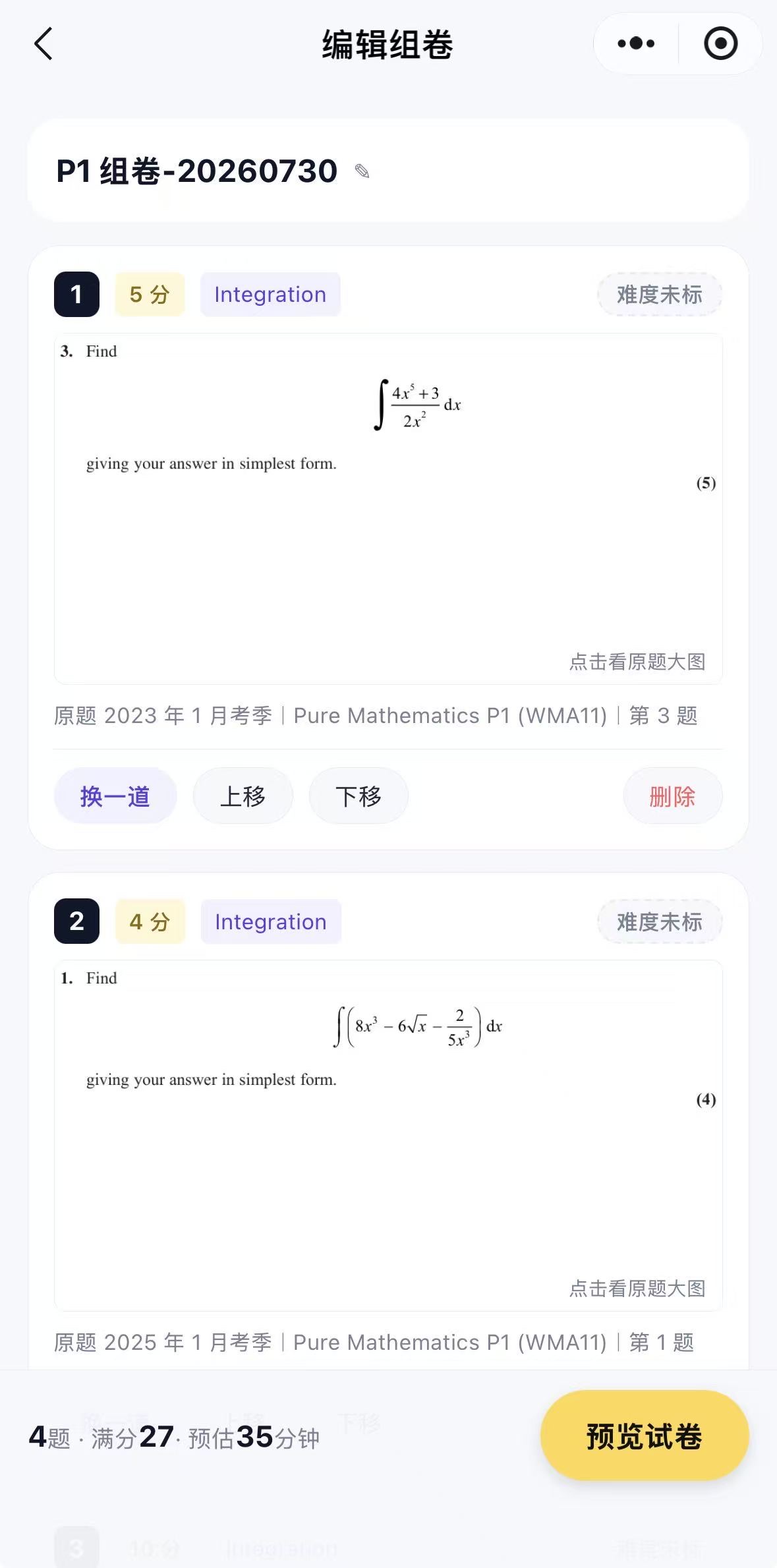
Every question can be overruled
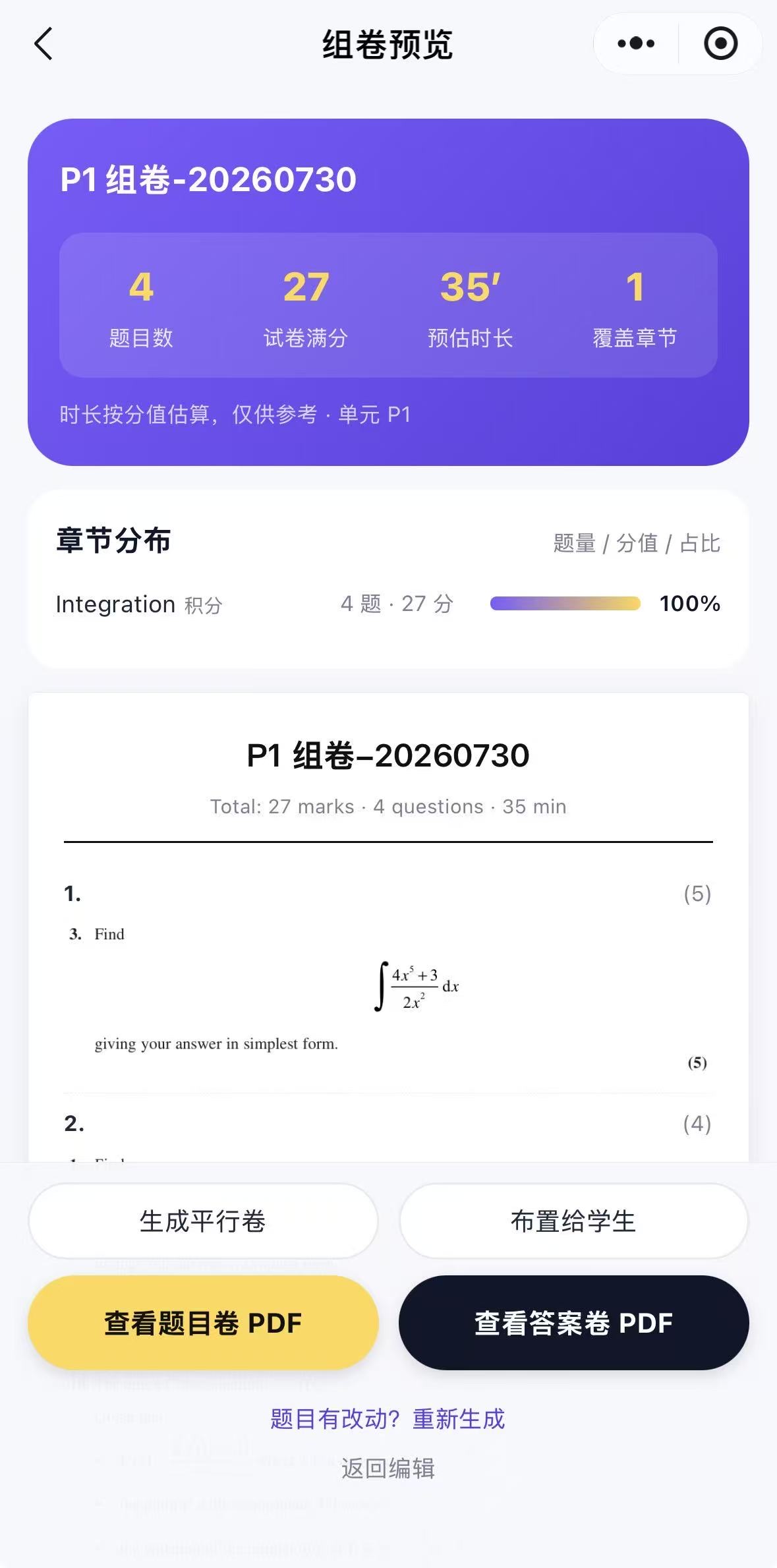
Swap, move up, move down, delete. Each one carries its full provenance: original question, January 2023 session · Pure Mathematics P1 (WMA11) · Q3.
Judgement: an AI-built paper has to be rejectable question by question, or no teacher will dare send it to a student. Overrulable matters more than more accurate.
STEP 05
See what it actually tests, before printing
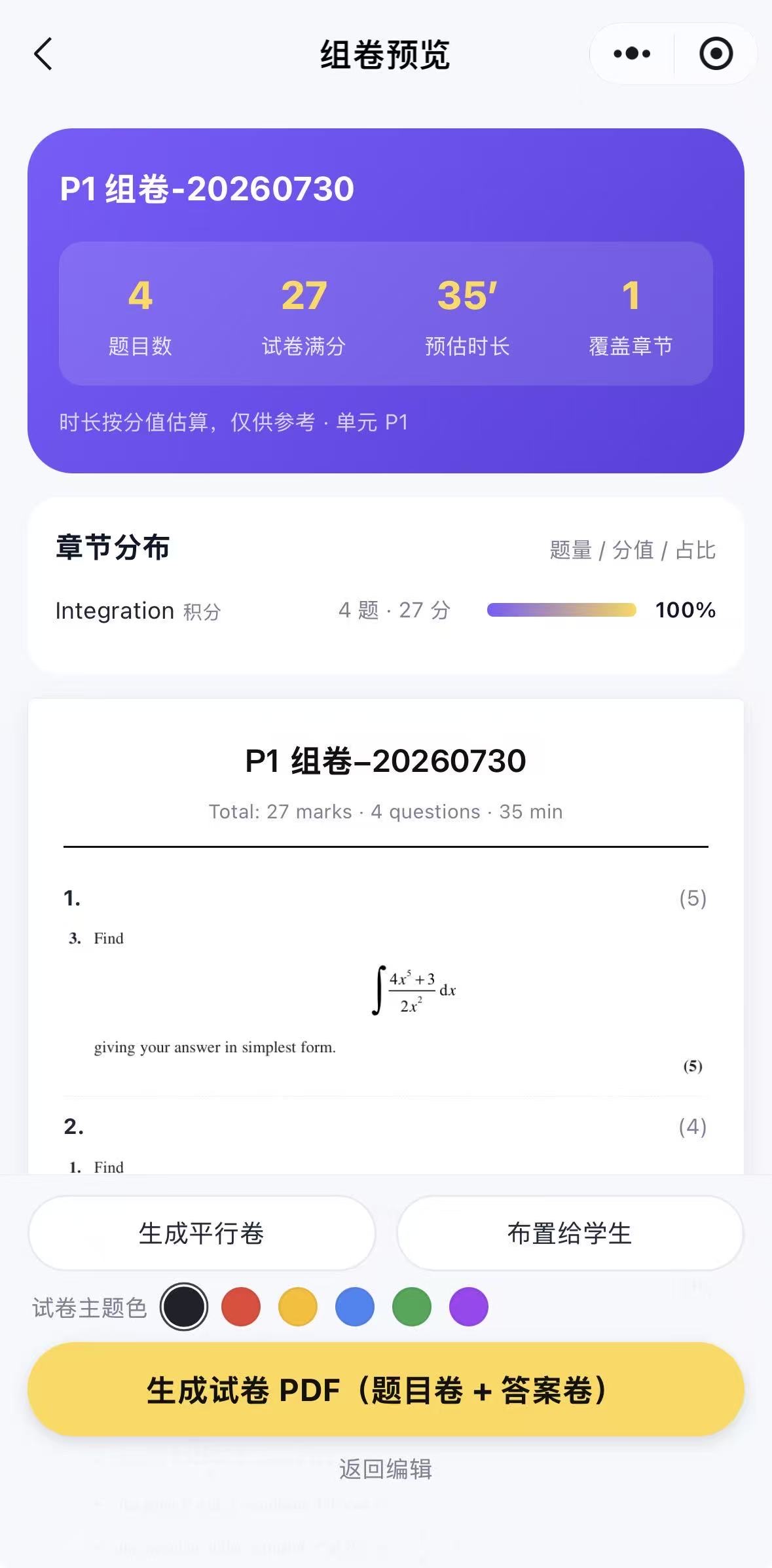
A chapter distribution bar: Integration, 4 questions, 27 marks, 100%. Plus question count, total marks, estimated time, chapters covered.
Judgement: the teacher has to explain to students and parents what this paper drills. This chart isn't for the system —— it's the thing they'll paraphrase.
STEP 06
Slow operations need visible progress
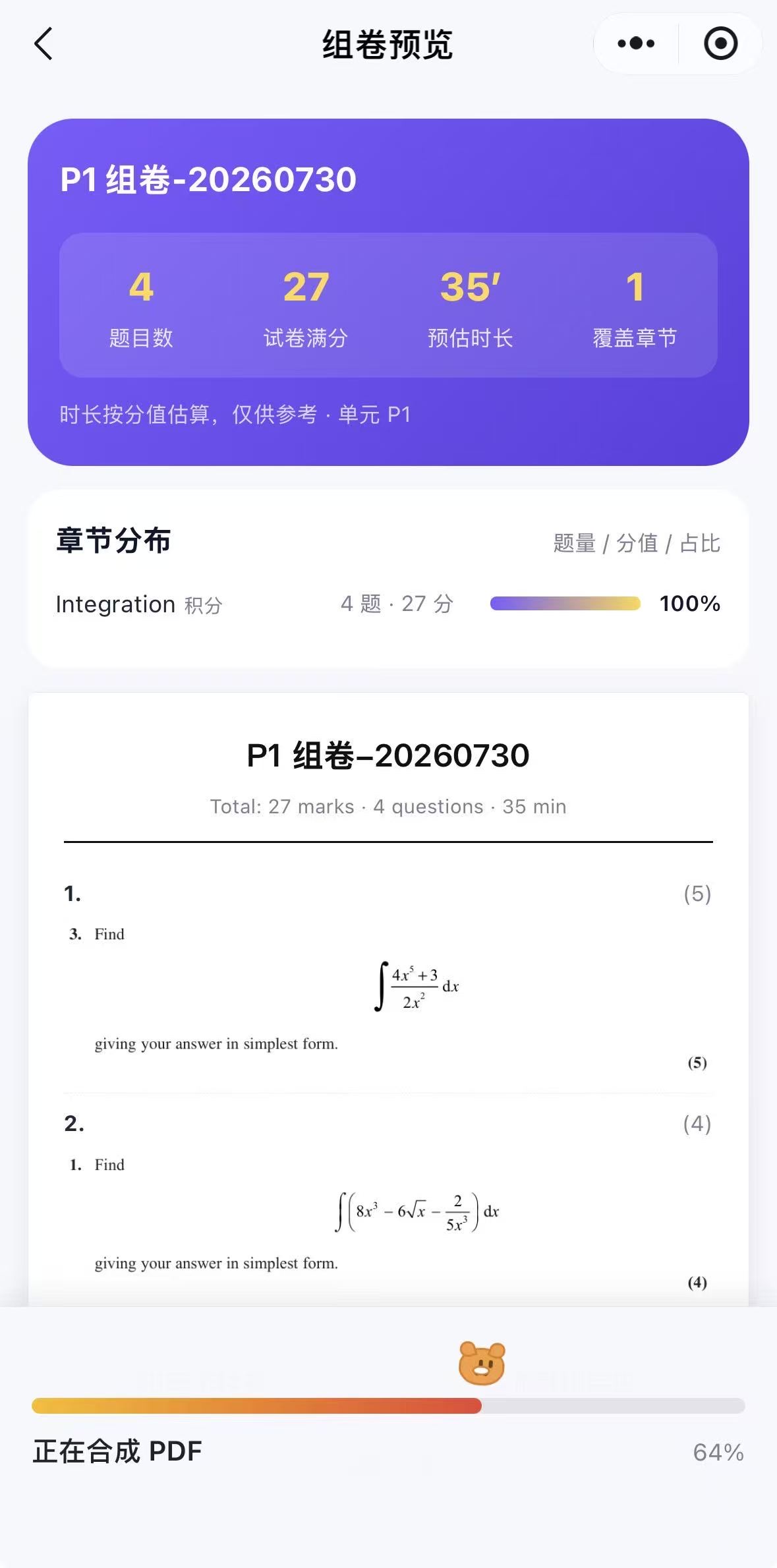
Rendering the PDF takes a few seconds to a dozen; the screen shows a live progress bar throughout.
Judgement: a wait with no progress bar reads as "frozen", and the user quits. This is not a place to save effort.
STEP 07
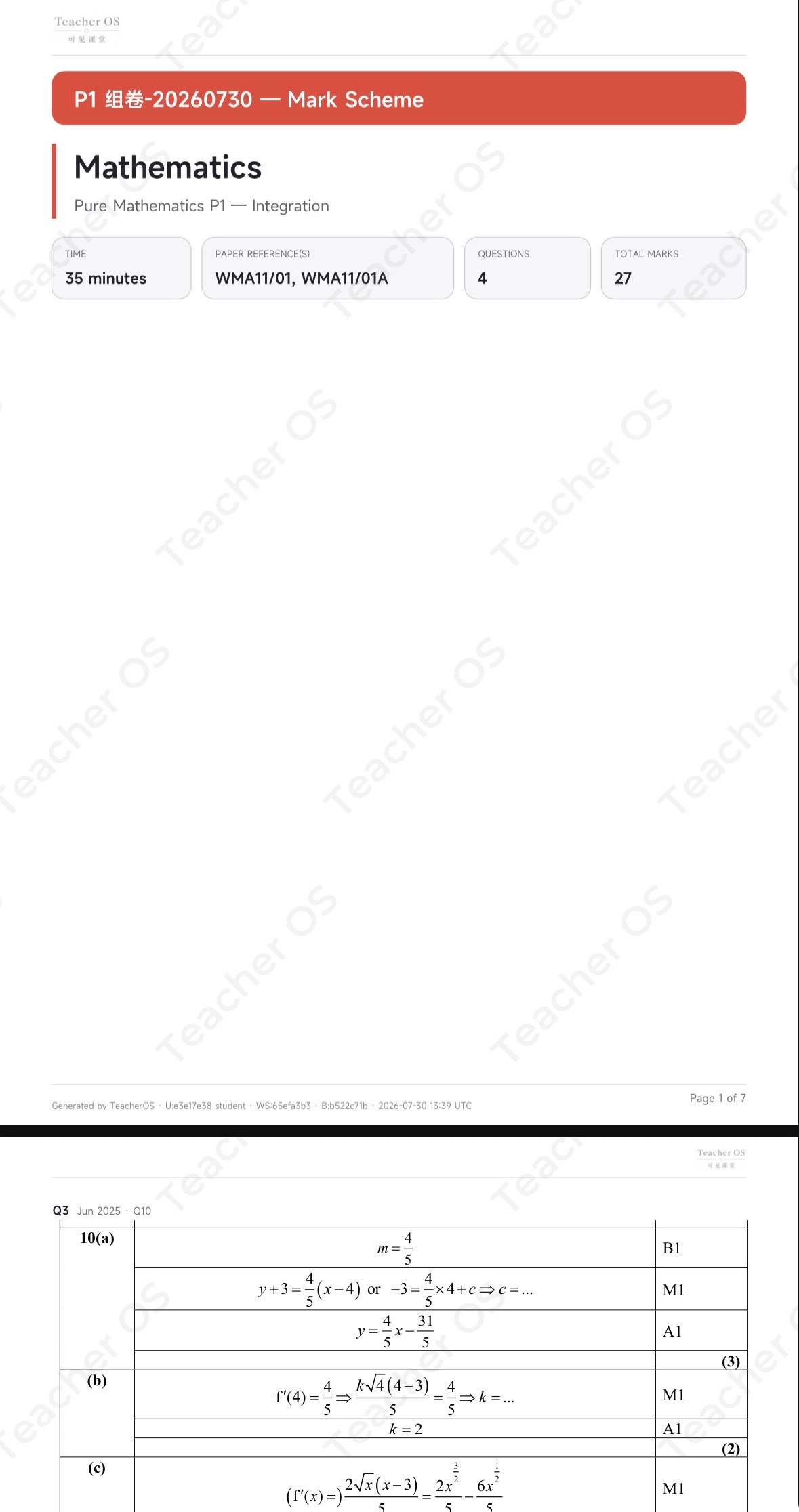
Paper and mark scheme must be two files
When it finishes you get two separate entry points: view question paper / view mark scheme. Plus "generate a parallel paper" and "assign to student".
Judgement: put them in one file and the teacher forwards the answers along with the questions. This is the kind of trap only someone who has actually used it walks into.
STEP 08
The artefact itself has to hold up
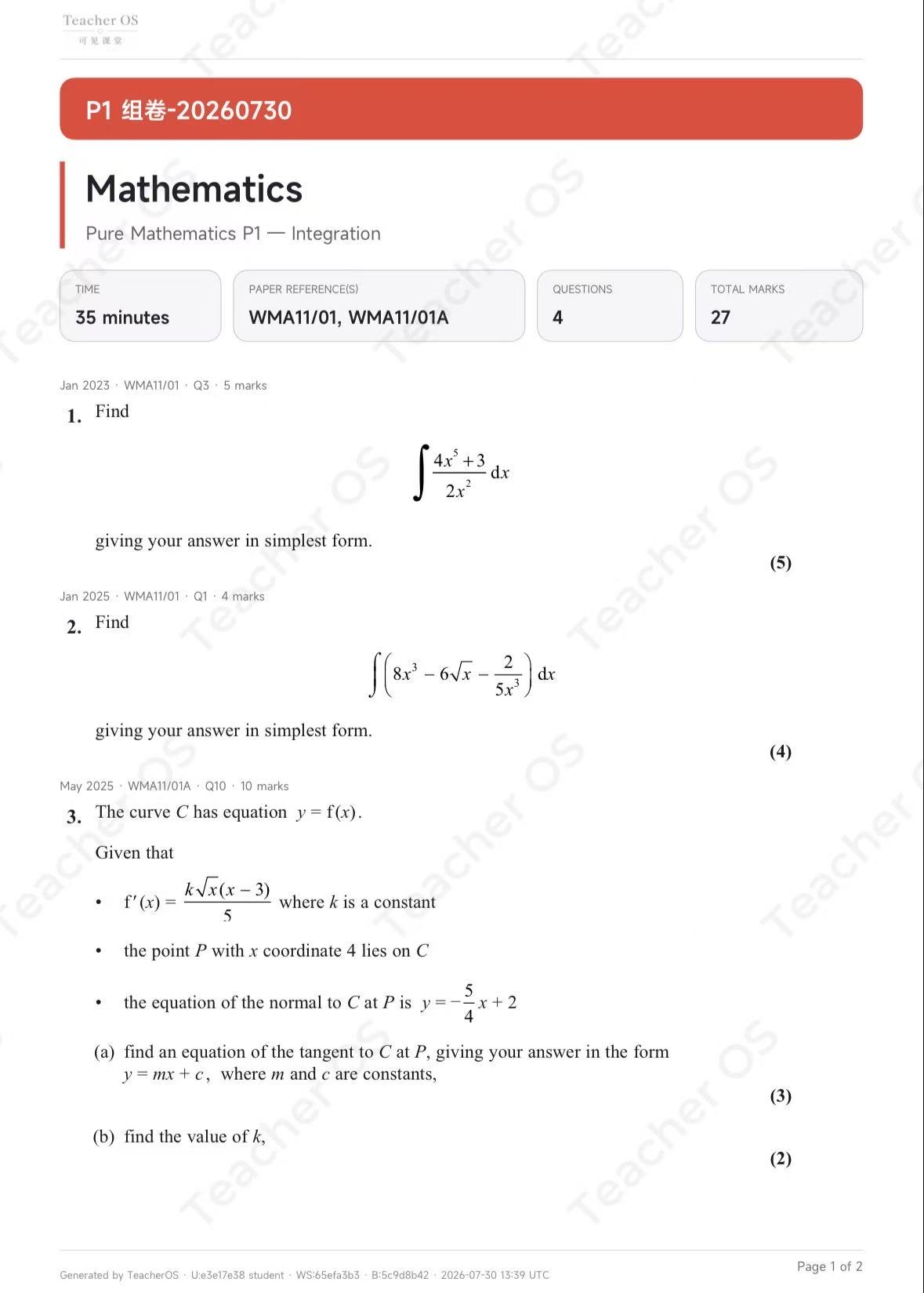
Standard exam layout: TIME / PAPER REFERENCE(S) / QUESTIONS / TOTAL MARKS, source session and original question number above each question, watermark across every page, provenance in the footer.
Judgement: the teacher prints this and hands it to a student. It cannot look like "something a tool exported". It has to look like a paper.
STEP 09
Papers you've built stay around
The list separates "draft" from "generated", and papers can be duplicated or deleted. Duplicate one, swap two questions, and that's the next student's paper.
Judgement: one-shot tools don't compound. Only when the output is reusable does the second use cost less than the first.